
Thermal & air sealing
Crawl Space Insulation in Virginia
Insulation is where crawl space work most often goes wrong in Virginia — usually because it was installed for the wrong crawl space design, or reinstalled over a moisture problem that was never fixed.
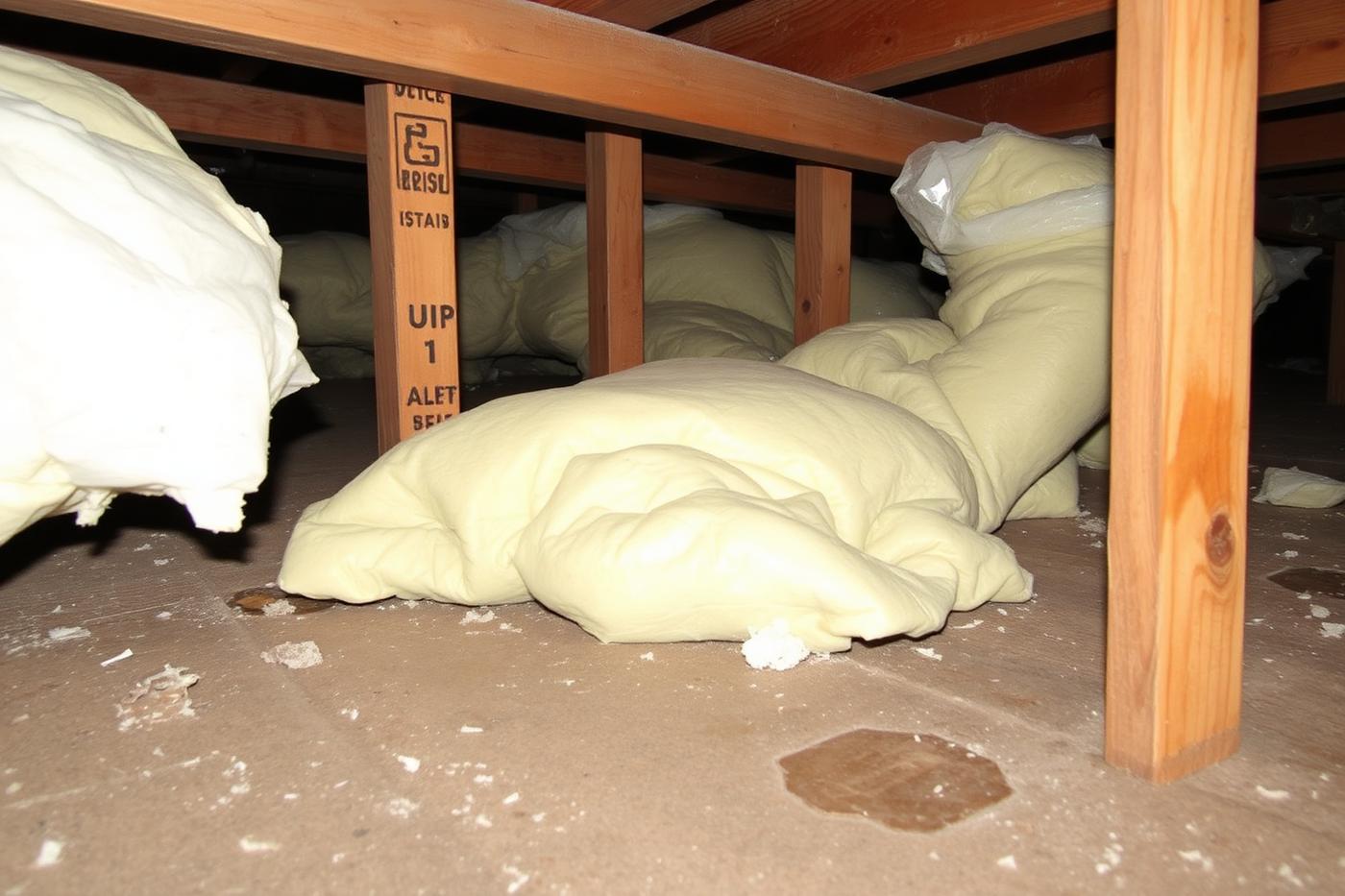
Falling and moisture-affected fiberglass
The most common finding in a Virginia crawl space is fiberglass batt insulation hanging out of the floor joists, dark with moisture, or lying on the ground. Once fiberglass absorbs moisture it loses most of its thermal value, gets heavy, pulls away from its supports and holds dampness against the subfloor.
Reinstalling batts in the same conditions produces the same result within a few seasons. Insulation is only replaced after the moisture source is addressed.
Insulation removal
- Wet, compressed or fallen batts removed and bagged
- Insulation contaminated by standing water or pest activity removed rather than reused
- Subfloor and joists exposed so wood condition can actually be assessed
- Removal completed before liner or encapsulation work so the crawl space stays clean
Floor insulation vs wall insulation
In a traditional vented crawl space, insulation belongs at the floor system — between the joists — because the crawl space is treated as outside the thermal envelope. It has to be held tight to the subfloor and properly supported, not just wedged in place.
In a closed, conditioned crawl space, the approach is usually reversed: the crawl space is brought inside the thermal envelope and insulation is applied at the foundation walls and rim, with the floor left uninsulated. Mixing the two approaches — sealing the space but leaving wet floor batts in place — is a frequent source of trouble.
Crawl space insulation vs encapsulation
They are not alternatives. Encapsulation controls moisture; insulation controls heat flow. Insulation installed in a damp crawl space will keep failing, and a sealed crawl space with no insulation strategy leaves comfort and energy performance on the table.
Air sealing sits between the two: rim joists, access doors, and penetrations between the crawl space and the living area affect both moisture movement and comfort.
The right approach depends on the crawl space
Whether insulation belongs on the floor or the walls, whether existing material should be removed, and whether the crawl space should be sealed at all depends on the crawl space design, ventilation, moisture readings, wood condition and local requirements. That is decided during an on-site inspection, not from a general rule.
Related crawl space information
Free inspection
Schedule a Free Crawl Space Inspection
Tell us what you're seeing under your Virginia home. We'll look at it, document the conditions and price only the work your crawl space actually needs.
- No cost and no obligation for the visit
- Written pricing based on measured conditions
- Serving homeowners across Virginia