
Core service
Crawl Space Encapsulation in Virginia
Encapsulation turns a damp, vented crawl space into a sealed, moisture-controlled space that stays close to the conditions of the house above it.
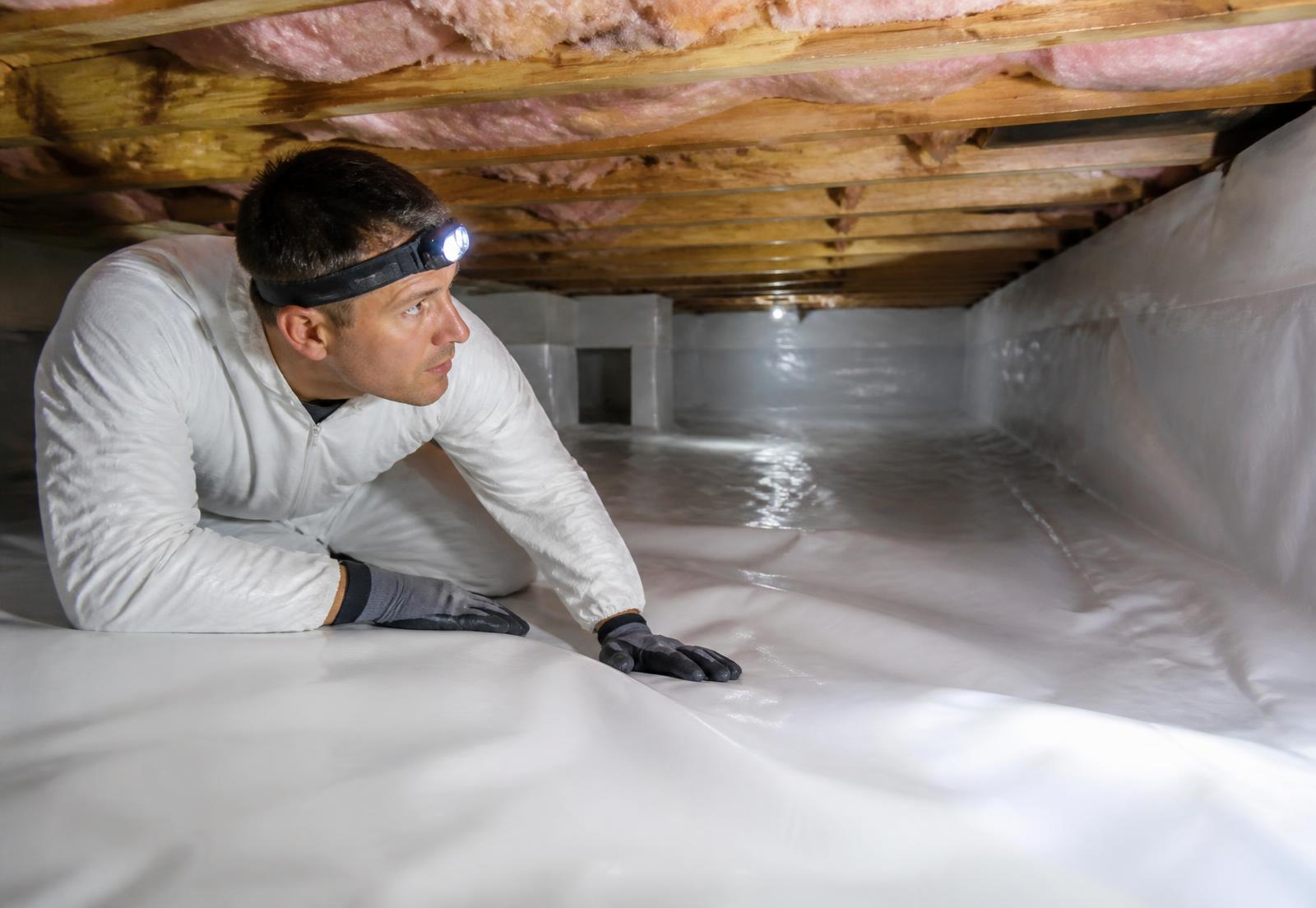
What a complete encapsulation system includes
Encapsulation is a system, not a single product. The pieces work together, and leaving one out is usually what causes a sealed crawl space to underperform.
- A durable ground liner covering the full soil surface, with sealed seams
- Liner carried up and terminated at foundation walls or piers where appropriate
- Sealing of vents, access doors and perimeter penetrations where the design allows
- Water management underneath: drainage and, where needed, a sump pump
- Mechanical humidity control sized for the volume of the space
- Insulation strategy chosen for the crawl space design and local climate
Vapor Barrier vs Full Crawl Space Encapsulation
A ground vapor barrier and a full encapsulation are not the same thing, even though the words are often used interchangeably.
A vapor barrier is a liner laid over the soil to slow moisture evaporating out of the ground. It is a meaningful improvement over bare dirt, and in a dry, well-drained crawl space it may be the appropriate scope. It does not, by itself, seal the crawl space, control outside humid air entering through vents, or manage liquid water.
A full encapsulation seals the space as an enclosed part of the building: heavier liner, sealed seams and wall terminations, closed or treated vents, drainage where water enters, and a dehumidifier to hold humidity steady year-round. It is a larger investment and it changes how the crawl space behaves rather than just covering the ground.
Which one is correct depends on how much water enters, how humid the space runs, the condition of the wood, and whether the crawl space can be sealed at all. That decision belongs on site.
Virginia crawl space encapsulation requirements
Virginia residential construction follows the statewide building code, which is administered locally by city and county building departments. In general terms, the code recognizes both traditional vented crawl spaces and closed, conditioned crawl spaces, and it sets out conditions for each — including ground covering, how a closed crawl space is supplied with conditioned air or mechanical drying, and how insulation is applied depending on the approach.
Requirements are also interpreted locally. A closed crawl space detail accepted in one Virginia jurisdiction may need to be documented differently in another, and permitting expectations vary between coastal and inland localities.
This is general background, not legal or code advice, and nothing here is a guarantee of compliance. Confirm current requirements with the building official for your locality before work begins.
Why encapsulation is common across Virginia
Virginia summers are humid statewide. When warm, moist outdoor air enters a cool vented crawl space, moisture condenses on ducts, framing and subfloor — a cycle that repeats through the season. Sealing the space and controlling humidity interrupts that cycle.
Coastal Hampton Roads homes deal with the added factor of a high water table, so encapsulation there is usually paired with drainage. Inland, in Richmond, Charlottesville and Roanoke, encapsulation is more often paired with insulation corrections and older-home framing repairs.
Related crawl space information
- Vapor Barrier InstallationThe ground liner layer explained on its own.
- DehumidifiersHumidity control inside a sealed crawl space.
- Crawl Space InsulationHow insulation changes in a sealed crawl space.
- Crawl Space Encapsulation CostRegional pricing context for Virginia crawl space projects.
- Crawl Space InspectionSee what a free on-site crawl space inspection reviews.
Answers
Common questions
Is crawl space encapsulation worth it in Virginia?
It depends on the crawl space. Where humidity runs high through the summer, the ground stays damp, or insulation keeps failing, sealing the space and controlling humidity addresses the cause rather than the symptom. In a dry, well-drained crawl space, a smaller scope may be appropriate.
How long does crawl space encapsulation take?
Many residential projects are completed in a few working days. Access, crawl space height, debris removal, insulation removal, drainage and structural work all extend the schedule.
Free inspection
Schedule a Free Crawl Space Inspection
Tell us what you're seeing under your Virginia home. We'll look at it, document the conditions and price only the work your crawl space actually needs.
- No cost and no obligation for the visit
- Written pricing based on measured conditions
- Serving homeowners across Virginia